
Dermatology and Skincare Studies
Advanced Models for Extracellular Matrix Synthesis
Our highly purified exosomes serve as an exceptional biological model for R&D laboratories investigating fibroblast proliferation and the synthesis of the extracellular matrix (ECM).
Rigorous laboratory testing confirms that our specialized materials actively promote the production of elastin while simultaneously inhibiting key inflammatory factors.
Packed with essential signaling molecules and proteins, these RUO exosomes enable cosmetic and dermatological researchers to study fundamental skin repair mechanisms, cellular regeneration pathways, and anti-aging responses without the unpredictable variables introduced by traditional live-cell cultures.
Orthopedics and
Joint Biology Research
Chondrogenesis and
Cartilage Preservation
For institutions focused on skeletal and joint biology, our biological inputs offer an invaluable tool for the detailed study of chondrogenesis and extracellular matrix regulation. Utilizing our standardized exosome models, researchers can effectively study the complex mechanisms behind the inhibition of cartilage-degrading catabolic enzymes, specifically MMP-13 and ADAMTS-5.
Furthermore, these materials provide a stable platform to investigate chondrocyte protection, cellular proliferation, and anti-apoptotic responses in advanced in vitro models of osteoarthritis (OA) and joint tissue degradation
Neurobiology and Cellular Repair
Neuroprotection and the Blood-Brain Barrier (BBB)
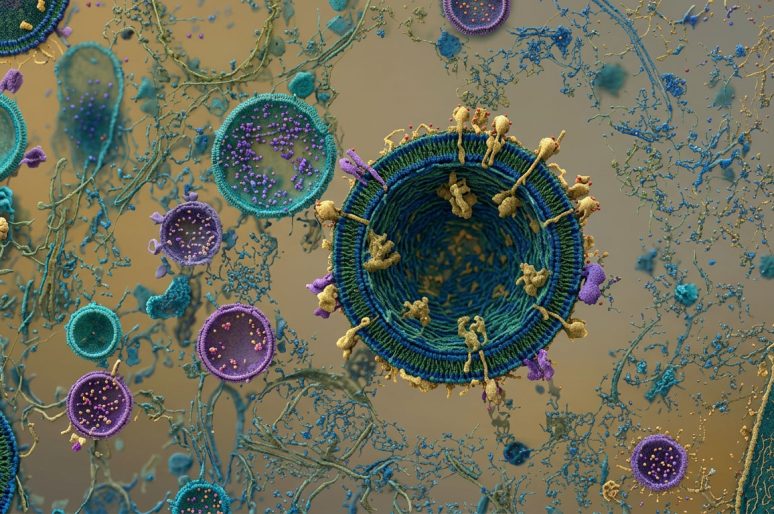
The unique nanoscale size and potent molecular composition of our exosomes significantly facilitate advanced neurobiological research, particularly in studies involving the penetration of the blood-brain barrier (BBB).
Laboratories utilizing our RUO materials can deeply investigate critical mechanisms of neuroprotection, angiogenesis, and the reduction of neuroinflammation in specialized laboratory models of cerebral lesions, traumatic brain injury (TBI), and ischemia.
By providing a rich profile of microRNAs, these biological inputs empower researchers to decode the pathways of neuronal survival, neurogenesis, and synaptic plasticity.
Orthopedics and
Joint Biology Research
Immune Response Modulation and Macrophage Transition
RMD Bioscience provides immunologists with a structurally complete, factor-rich biological material designed to study the intricate modulation of immune responses. Our exosomes are highly effective for investigating macrophage polarization, specifically the critical cellular transition from pro-inflammatory M1 macrophages to anti-inflammatory M2 macrophages.
Additionally, researchers can utilize our standardized inputs to meticulously model the suppression of excessive immune reactions, focusing on the targeted inhibition of key pro-inflammatory gene expressions, including interleukins such as IL-6 and tumor necrosis factor-alpha (TNF-α).