
Competitive Advantage
Welcome to our Competitive Advantage hub. Discover why RMD Bioscience’s cell-free exosome materials outperform traditional biological models like live stem cells, PRP, and plant-derived extracts, offering unparalleled stability and standardization for your most critical in vitro research.
Feature
RMD Bioscience Exosomes
(UC-MSCs)
Live Stem Cells
Platelet-Rich Plasma (PRP)
Plant-Derived Exosomes
Source / Origin
Cultured Mammalian Cells
Live Mammalian Cells
Fresh Blood Draw
Plant Tissue Extraction
Particle Size
30–150 nm (Avg. 101.1 nm)
N/A (Whole Cells)
Variable (Large Platelets)
50–1000 nm
Signature Markers
CD9, CD63, CD81
Standard Cell Surface Markers
N/A
TET8, PEN1
Preparation & Storage
Ready-to-use, mass-produced, easy low-temp storage
Complex culturing, difficult to store and transport
Requires fresh extraction and on-site preparation each time
Varies by extraction method (e.g., solvent, ultrasonic)
Molecular Profile
Abundant, standardized growth factors & cytokines
Secretes factors, but subject to cell viability
Limited types and amounts of growth factors/cytokines
Varies, mimics standard botanical extracts
In Vivo Experimental Risks
Extremely safe, no immune rejection (allogeneic model safe)
High risk of immune rejection, cell trapping in lungs/liver
Autologous only (inconsistent for standardized modeling)
Safe, but lacks mammalian signaling compatibility
Scope of R&D Applications
Broad (Neurology, Orthopedics, Immunology, Skin Repair)
Broad, but limited by complex handling
Narrow range of study applications
Mostly limited to basic cosmetic/skincare formulations
Superior Stability and Scalability
The Next Generation of Biological Models
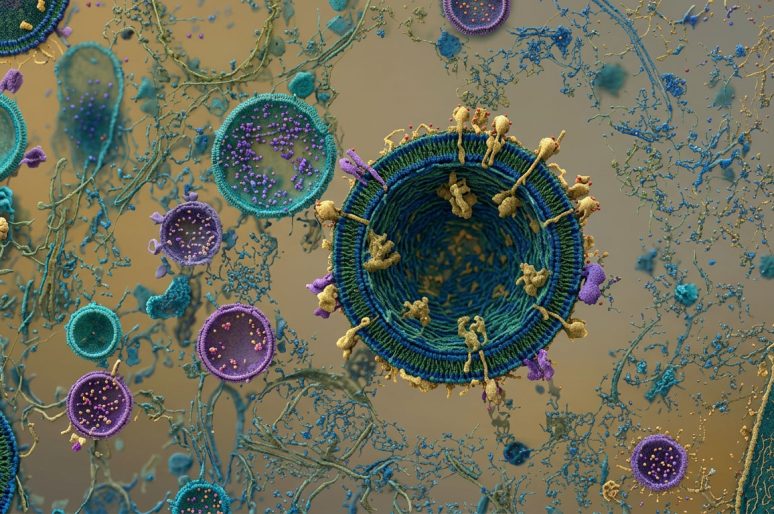
To achieve reproducible and accurate results, modern research laboratories require highly reliable foundational materials. Our human umbilical cord Wharton’s jelly-derived exosomes (UC-MSCs) provide a structurally complete, standardized cell-free platform strictly for research use (RUO). Unlike traditional methodologies that introduce unpredictable variables, our meticulously purified biological inputs offer extraordinary batch-to-batch consistency, robust molecular profiles, and a highly scalable manufacturing process.
This effortlessly supports even the most demanding high-throughput institutional studies and product development pipelines, ensuring your lab operates with maximum efficiency.
Exosomes vs. Live Stem Cells
Eliminating Experimental Risks and Culturing Complexities
Transitioning from traditional live stem cell models to our cell-free exosome materials drastically reduces your laboratory’s experimental risks. Utilizing our RUO biological inputs eliminates the high costs and labor-intensive requirements of in situ cell culturing and maintenance.
Furthermore, our carefully isolated exosomes can be easily stored at low temperatures without compromising their structural integrity.
For researchers conducting advanced in vivo animal models, our materials offer exceptional batch-to-batch consistency and completely remove the severe risks of immune rejection typically associated with live-cell transplantation.
Standardized Molecular Profiles with Immediate Availability
Exosomes vs. Platelet-Rich Plasma (PRP)
While Platelet-Rich Plasma (PRP) has been utilized in various studies, it suffers from significant limitations, including highly variable growth factor concentrations and the constant need for fresh blood extraction and on-site preparation.
In stark contrast, RMD Bioscience’s exosome materials deliver a strictly standardized, highly concentrated profile of crucial cytokines and growth factors.
Our proprietary mass-production platform ensures that you have immediate, off-the-shelf access to premium biological inputs whenever your research demands it, completely bypassing the unpredictable processing times and inconsistent molecular yields inherently linked to traditional PRP preparation.
Mammalian Exosomes vs. Plant-Derived Alternatives
Superior Signaling Pathways
for Complex Biological Modeling
Our premium exosomes, derived exclusively from mammalian cells (human UC-MSCs), possess complex, highly specific microRNA profiles and classical surface markers—including CD9, CD63, and CD81.