
Premium Exosomes
The StemKine® Technology Platform
Exosomes Derived from Wharton’s Jelly MSCs
At the foundation of our product line is our proprietary StemKine® isolation and purification platform.
We meticulously source our exosomes from human umbilical cord Wharton’s Jelly Mesenchymal Stem Cells (UC-MSCs).
This highly primitive cellular source is renowned for its robust secretory potency, high proliferation rate, and exceptionally low immunogenicity in laboratory models.
Unlike traditional live-cell models that carry risks of immune rejection and require complex, costly culturing protocols, our cell-free exosome materials provide a stable, scalable, and highly standardized biological input for your most demanding in vitro and in vivo research applications.
Precision Metrics
Unmatched Product Specifications
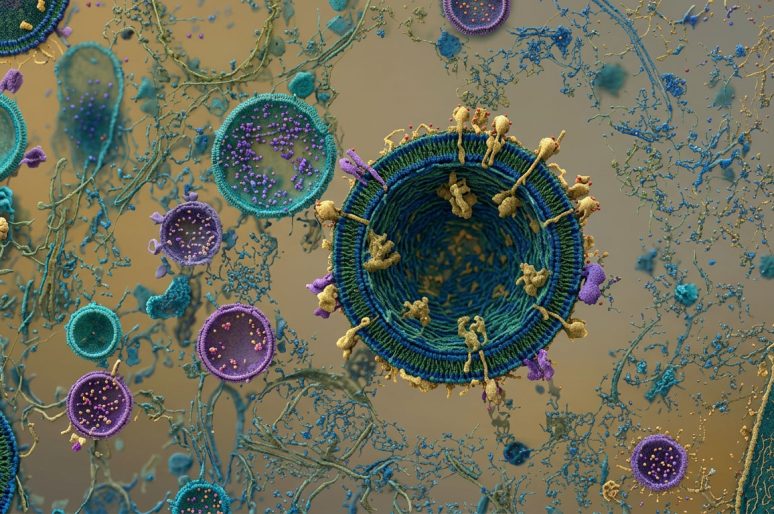
Consistency is the absolute cornerstone of reliable scientific research, which is why our biological materials are manufactured to exact, uncompromising specifications. Each batch undergoes stringent quality control through advanced quantitative flow cytometry and nanoparticle tracking analysis to ensure an average particle size of exactly 101.1 nanometers and an exceptional purity rate exceeding 90 percent.
Furthermore, our exosome solutions deliver a dense concentration of over 10 billion particles per milliliter, complemented by a rich profile of over 3,500 micrograms of protein per milliliter.
This precise quantification guarantees that your R&D institution receives a highly potent material that minimizes batch-to-batch variability and maximizes experimental reproducibility.
Comprehensive Safety Profile
Validated by Rigorous Third-Party OECD Testing
Safety and stability are critical variables when introducing biological materials into your research pipelines. RMD Bioscience subjects all StemKine® products to rigorous third-party evaluations in strict accordance with international OECD testing guidelines.
Our exhaustive testing confirms absolutely zero cytotoxicity and no skin or mucosal irritation, validated under OECD TG 439 and OECD TG 492.
Additionally, our exosomes demonstrate no phototoxicity (OECD TG 432), no genotoxicity (OECD TG 471), and exhibit a remarkably safe profile in skin sensitization assays (OECD TG 442C/442E).
These pristine safety metrics provide researchers with complete confidence when integrating our RUO materials into complex cellular models.